
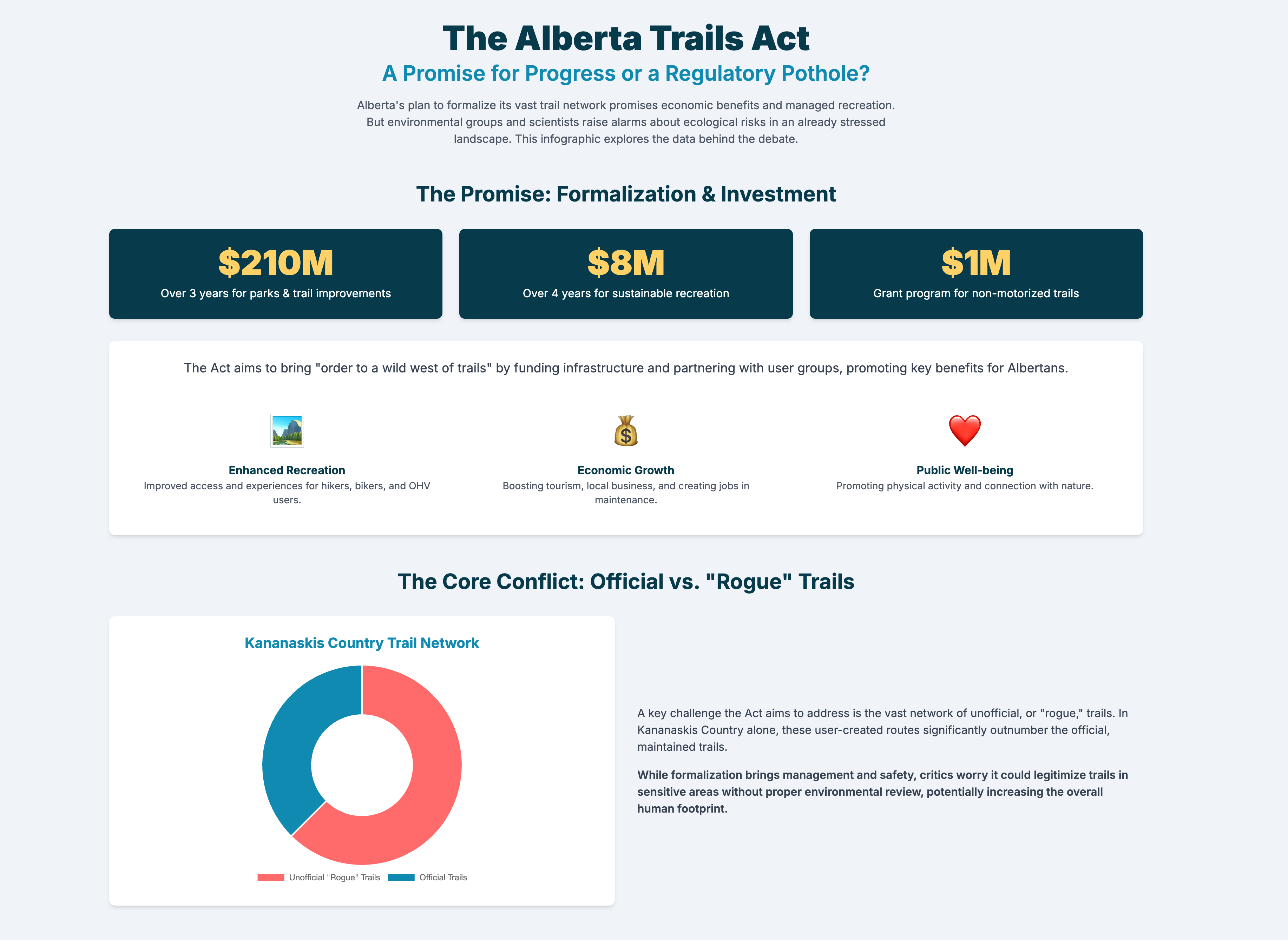
The Alberta Trails Act was introduced as a step toward organizing and regulating the province’s trail systems, but its promise of progress comes with serious caveats. While the Act establishes clearer definitions and enforcement mechanisms, it lacks strong ecological protections and tilts heavily toward motorized recreation, leaving non-motorized users and sensitive habitats at risk.
Equally concerning is the lack of meaningful public and Indigenous consultation. By sidelining these voices, the Act risks missing opportunities for community-driven stewardship that could ensure long-term sustainability. In the absence of robust policy, grassroots organizations and non-profits continue to shoulder the burden of trail maintenance, education, and advocacy—often with limited resources.
For Alberta to avoid turning this legislation into a “regulatory pothole,” the path forward must include stronger environmental safeguards, equitable support for all user groups, and inclusive decision-making. Authentic stewardship, rooted in collaboration and ecological responsibility, is the only way to ensure that Alberta’s trails remain accessible, sustainable, and resilient for future generations.
A Step Toward Structure
At its core, the Act attempts to standardize trail management by:
- Defining official trails
- Establishing guidelines for use
- Providing a framework for enforcement
This framework has the potential to bring long-overdue clarity to a patchwork system of trails across Alberta.
Shortcomings and Concerns
Despite these intentions, the Act falls short in several key areas:
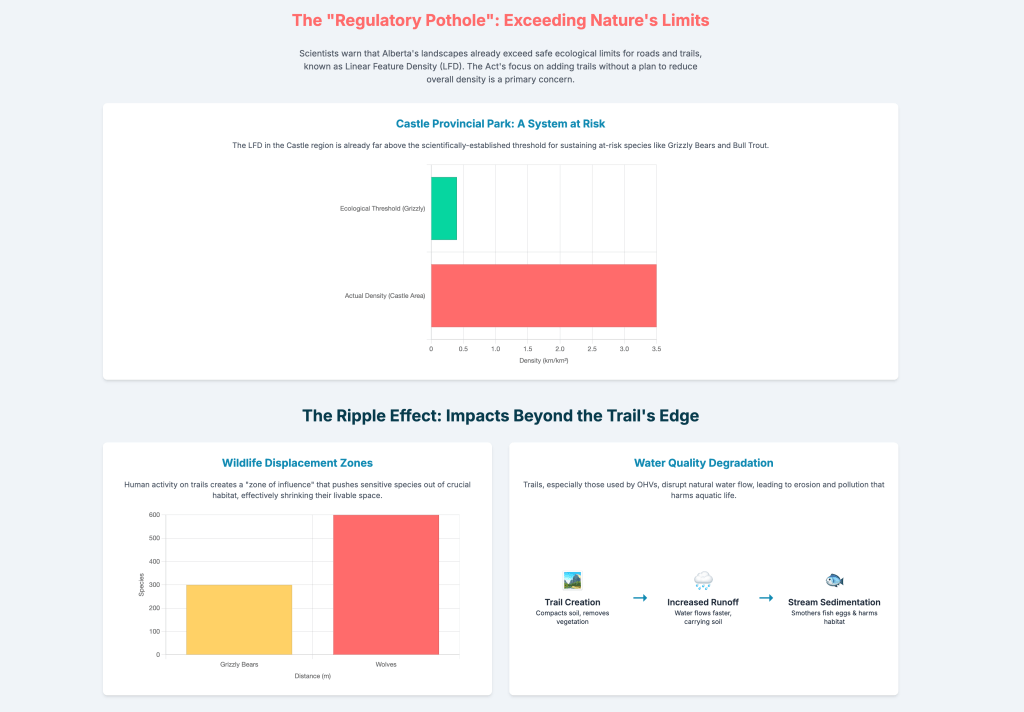
- Ecological Oversight: The legislation does not adequately address environmental protection, leaving sensitive habitats vulnerable to overuse and degradation.
- Motorized vs. Non-Motorized Balance: It appears to favor motorized recreation, creating inequity in how different user groups are supported.
- Public and Indigenous Consultation: The process has lacked robust engagement with local communities and Indigenous groups, whose voices are critical in sustainable land management.
The Role of Grassroots Organizations
Non-profits and local trail groups have long filled the gaps left by policy. They:
- Build and maintain sustainable trail networks
- Educate users about responsible recreation
- Advocate for balanced stewardship
Yet their efforts remain underfunded and often overshadowed by industry lobbying and regulatory inertia.
Toward Authentic Stewardship
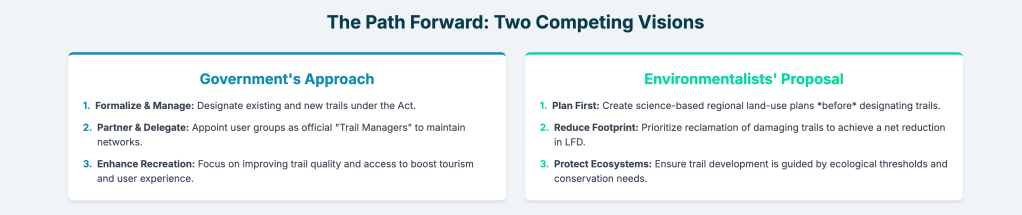
If Alberta is to achieve genuine progress, the Trails Act must be paired with:
- Stronger ecological safeguards
- Transparent and inclusive decision-making
- Greater investment in non-motorized recreation
- Meaningful collaboration with Indigenous communities
Conclusion
The Alberta Trails Act represents both an opportunity and a risk. While it provides a framework for trail management, it risks becoming a regulatory pothole if it continues to overlook ecological integrity and community voices. Authentic stewardship—rooted in sustainability, equity, and inclusivity—will be essential for ensuring Alberta’s trails serve both people and the environment for generations to come.

 singletrack sessions
Leave a comment